

Imagineer Kirk Hanson Interview
If you have an interest in Disney history, animation, or the design of classic theme park attractions, former Walt Disney Imagineer Kirk Hanson has valuable insights to share. In this conversation, Kirk discusses his journey into the industry, the lessons he learned from legends at CalArts and Disney, and his belief that some of the best attractions succeed because they focus on simple, visual experiences rather than overly complicated narratives.
He also shares his strong opinions on a range of topics, including hand-drawn animation versus computer-generated imagery (CGI), the evolution of the Haunted Mansion, and the fact that the term “theme park” was coined by Disney. For anyone seeking a candid look at how classic Disney magic was created, this conversation is rich with insight.
Source: Disney
How Imagineer Kirk Hanson Got His Start in Animation
Kirk Hanson refers to himself as a journeyman, but the path he took is the kind many animation fans dream about. Growing up in the 1960s, he watched Hanna-Barbera cartoons, especially Jonny Quest, before gradually discovering Disney through theatrical re-releases and TV specials like The Wonderful World of Color. This early exposure mattered to him; he didn’t just watch the cartoons; he began drawing them. This passion carried him through school and eventually into CalArts’ Character Animation Program, recognized as one of the most influential training grounds in modern animation.
At CalArts, Hanson learned not only from teachers but also from industry giants. He mentions names like Jack Hannah, Bob McCrea, Elmer Plummer, Ken O’Connor, T. Hee, and Bill Moore. This environment provided him with direct access to the classical Disney way of thinking.
What resonated most with him was not a trendy style, but rather a dedication to craftsmanship. “We all wanted to draw like Marc Davis and animate like Milt Kahl,” he says, capturing the essence of his education. Today, some people refer to a certain modern cartoon look as “CalArts style,” but Hanson argues that this perspective misses the point. For him, the true influence of CalArts lies in the classical Disney standard: strong drawing, clean design, and animation that feels alive.
Why Kirk Chose Imagineering and Model Making
After graduating, Kirk entered the industry during a writer’s strike when work was scarce. Instead of waiting for opportunities, he took a practical approach by learning architectural model making in San Francisco. He hoped this skill would help him get into Disney’s model shop and, eventually, WED Enterprises, which is now known as Walt Disney Imagineering. This decision turned out to be one of the most significant pivots in his career.
Hanson eventually worked at Gary Goddard Productions, then Hanna-Barbera, and later secured a position at WED/WDI. Throughout his journey, he gained valuable experience in the physical aspects of theme park design: learning how to build models, solve dimensional problems, and turn concepts into tangible designs that animators or designers could use.
One of his early Disney-related assignments came from The Great Mouse Detective, where he was tasked with creating a model of Rattigan’s blimp. This model allowed animators to trace it accurately, similar to how Disney had previously handled other vehicles.
He also mentions working closely with people like Bob Baranick and Tony Baxter, which helped shape his understanding of how Disney attractions are developed from the inside out. One of the most interesting parts of his story is that he discovered something important while working in the model shop: he didn’t actually want to stay there forever. The material was unpleasant, the work was messy, and he realized his real interest was still in story and animation.That self-awareness helped redirect him back toward feature animation.
Working on Aladdin and 1990s Disney Animation
Imagineer Kirk Hanson eventually transitioned to Disney Feature Animation, where he worked on several major projects. He started with visual development on Aladdin and soon realized he had a strong preference for story work, which included continuity, gags, and sequence development. This shift was significant because it led him to work on some iconic animated films:
- Aladdin
- The Hunchback of Notre Dame
- Hercules
- Fantasia 2000
- Treasure Planet
There’s an important reminder here for anyone who appreciates these films. What appears to be a single movie on screen is actually the result of hundreds or even thousands of people’s efforts. Kirk talks about how the end credits alone illustrate the extensive number of artists and technicians involved in creating a feature film. This is part of why he values both traditional and modern filmmaking methods, despite having clear preferences.
He does not underestimate the difficulty of hand-drawn animation. In fact, he can hardly fathom the immense labor that went into films created before the Xerox era, which required hand-drawn rough animation, cleanup, in-betweens, as well as ink and paint, all done manually. The key takeaway is not simply an appreciation for nostalgia, but rather a recognition that those films were incredible achievements of craftsmanship.
Hanson also points out that audience members often do not consider the entire production process behind a movie. This is especially true for classic Disney films, where the artistry can make the creation process appear effortless, even though it was far from it.
Keeping Theme Park Storytelling Simple
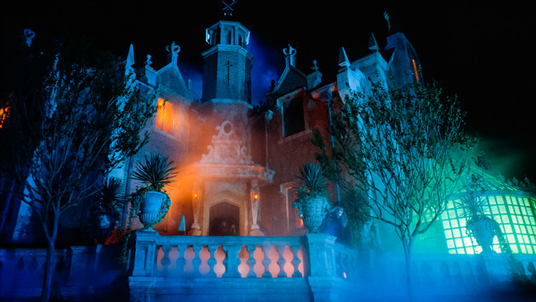
A significant part of this conversation focuses on theme parks, particularly the Haunted Mansion, Pirates of the Caribbean, and the overall design philosophy behind Disneyland and Walt Disney World. Imagineer Kirk Hanson is very clear about one key point: not every attraction needs a deep, detailed backstory.
Source: Disney
In his opinion, the best classic attractions are often just tours of a place. Visitors move through a world, encounter characters, absorb the atmosphere, and enjoy the ride. He challenges the modern tendency to force elaborate narrative structures into attractions that were never designed that way. For him, the Haunted Mansion and Pirates of the Caribbean succeed because they offer immersive environments rather than complex plots.
Kirk even highlights a structural rule that remains important in Disney park design: the hub-and-spoke layout. In both Disneyland and the Magic Kingdom, different lands radiate from a central hub, which creates clarity. Each land is a facet of a larger idea, rather than a random collection of unrelated concepts.
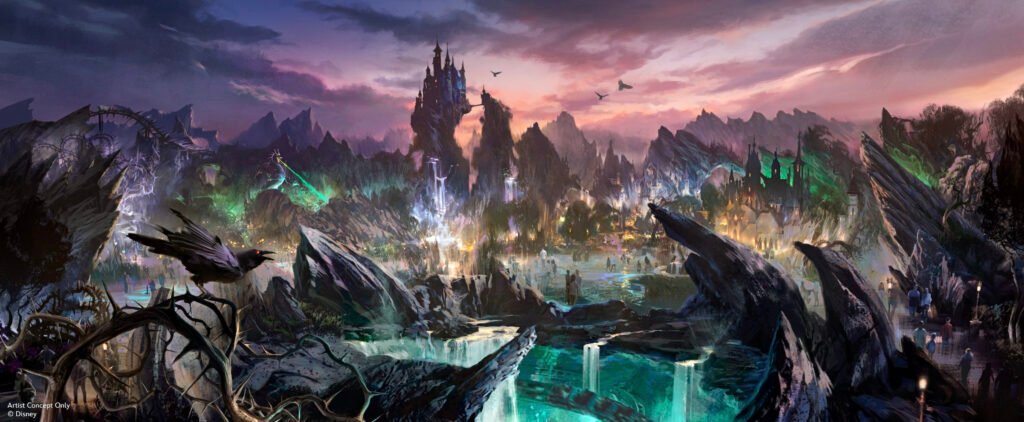
This is why Kirk is skeptical of ideas such as Villains Land. He argues that if you create a land focused solely on villains, you eliminate the contrast that makes villains compelling in the first place. Villains are intriguing because they exist in opposition to heroes and the worlds they threaten. He also criticizes decisions, like placing Haunted Mansion’s Hatbox Ghost in an awkward location that doesn’t fit the ride’s internal logic. Kirk’s overarching message is that Disney’s best attractions rely on design discipline. When you over-explain, you risk weakening the overall experience.
Source: Disney
Imagineer Kirk Hanson’s perspective is valuable because he has firsthand experience in building aspects of the Disney brand. He comprehends both the artistry and the mechanics behind it. Kirk is unafraid to express that some of Disney’s best work often stems from restraint, visual thinking, and a strong sense of place.
Special thanks to former Walt Disney Imagineer Kirk Hanson for joining us on The WDW Connection Show!

The WDW Connection Show Podcast
The WDW Connection Show podcast welcomes you to enjoy informative conversations about the history and planning of Walt Disney World and its attractions. Join Mike, the host of The WDW Connection Show, as he has in-depth discussions with former Imagineers, Cast Members, and other significant people associated with Walt Disney World and the Disney brand. You can find the video component of the show on YouTube and Facebook, and the audio component of the podcast on Apple Podcasts, Spotify, and YouTube Podcasts.
We sincerely appreciate the fantastic support from our WDW Connection community and loyal podcast listeners. If you could please take a moment to rate and review our new podcast on Apple Podcasts and Spotify it would mean the world to us! Your feedback will help more people find and enjoy our engaging and insightful conversations. Thanks for your support!